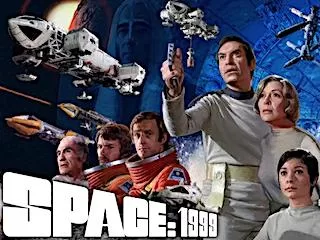
Space:1999 Reboot – Keep David Kano

Space 1999 is ripe for a reboot, and here I will be discussing which aspects of the original show should be kept and which should be discarded. I won’t be going in any particular order (of importance, for example), but I hope to cover all significant aspects of the show as I go.

Just a month ago or so, the number of surviving cast members of the show, already a lamentably small number, decreased by two, with the passing of Prentis Hancock and Clifton Jones within a few days of one another. Jones is the man who personified what, in my humble opinion, was a terribly underserved character, and one I feel should absolutely be included in the reboot.

I’m speaking, of course, of the great David Kano. After Koenig, Russell and Bergman, Kano is clearly the most important character to the show (no offense intended to Alan Carter!).
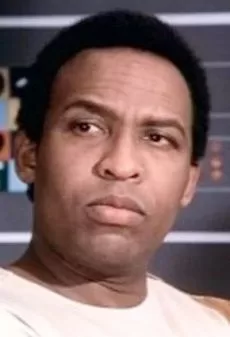
Clifton Jones as David Kano
David Kano, as portrayed by Clifton Jones

Kano’s on-screen career begins in Season 1, episode 2 (a very similar character, Ben Ouma, appeared in the pilot) and continued on through all of the remaining episodes of the first season (or series, as they call them in the UK). After the first season he, along with the likes of Bergman and Morrow, were victims of a purge of characters that new producer Fred Freiberger found not particularly likable, and was never heard from again. Rather, in season 2, it was new arrival Maya that seems to have replaced both Kano and Bergman, which is truly a shame since it was the interplay between those two characters that held so much storytelling promise.

Kano operates as the chief “Computer Operations Officer” on Alpha. More than this, he represents technology in the series, separate and subtly different from science, which is generally Bergman’s purview. While this may not seem like much of a distinction, in this show it positively is.

For illustration, let me contrast the Kano / Bergman relationship with the Spock / McCoy relationship from Star Trek. In the latter, Spock represents logic and McCoy represents emotion. I think that as that show developed, the writers thought that the two would be equally balanced, with Spock’s logic-based approach prevailing more or less half the time and McCoy’s humanist, emotional outlook being the right one the other half. In practice, it was never so balanced. Spock’s logic was shown to be the right course nearly every time, and McCoy, sadly, just watched from the sideline and carped about the application of logic to the situation (even when it seemed to be the obvious thing to do).

With Bergman and Kano, though, there was great promise for a much more balanced dichotomy. Both men embraced logic (which, in a science fiction/fantasy show, is probably the right side to be on), but for Kano logic was embodied by technology, namely the computer. He had full faith in the computer and would come to its defense when it was criticized (“Computer is not a crystal ball!”). Bergman, on the other hand, was far more willing to embrace the metaphysical or even the spiritual. Bergman had far less confidence in computer because he felt that the scope of what humans really knew or understood was much less than a person like Kano would like to admit.

This worked on Space: 1999 in a way that it would not work in Star Trek. Even though both shows were pretty firmly in the science fantasy genre, employing things like ESP, beings with god-like powers, telekinesis and other elements that have no real scientific basis (that we know of, at least!), Star Trek always tried to explain such things in scientific terms (the origin of “technobabble”) while Space was content to leave mysterious things mysterious. This put Bergman on even footing with Kano in a way that McCoy was never on Spock’s level of credibility.

Look no further than “Black Sun” to see how wonderful the dynamics between Bergman and Kano can be. In this episode, to save power, most systems on Alpha need to be shut down, and this eventually includes the computer as well. Kano is both indignant and horrified by the idea, as he can’t imagine anything more important to their survival than computer. Bergman, on the other hand, can only be described as bemused by Kano’s attitude toward something that is not going to be able to help them avoid being swallowed by a black hole.

The distinction between Kano, who embodies science through technology, and Bergman, who embodies science but not necessarily technology, provided a great opportunity for 1999 writers to comment on mankind’s relative ignorance. This is important for the series, not just because of the presence of the Mysterious Unknown Force (or “MUF”, to be discussed in a future post) but also the fact that in general, a whole lot of spooky, unexplained things happen out in space. While the show can be fairly criticized for failing to be faithful to some very basic scientific principles (shockwaves in space, for one, and let’s just not talk about the physics of the Breakaway event), I think we are behooved to allow ourselves to imagine that there’s probably more we don’t know than that we do know, and that would probably only accelerate as we traveled deeper into space and experienced more.

So, keep David Kano, the prickly computer operator whose lack of people skills so perfectly mimics many of the technology people we all know, and let him face off against Victor, who is going to always be coming at him with wild, extra-scientific theories (which, if the writers are doing their jobs, will be wrong as often as they’re right).

Space 2099 – The Reboot That Never Was

A few years ago, fans of Space: 1999 were given some hope that the show was getting revitalized when a sizzle reel appeared describing “Space: 2099”, a reintroduction of the series. Now, this was nothing like the Ron Moore reboot of Battlestar Galactica. Rather, it was more like George Lucas’ enhancement of the original Star Wars trilogy: updated effects and a few editorial changes.

Space 2099 was intended to be a re-editing of the original series, with changes made to modernize it. There were no new episodes or new characters, but rather a reworking of the classic series that would hopefully be more appealing to modern viewers.

Although Space 2099 was merely a polishing of the existing material rather than a continuation or a “reimagining” of the show, it is still informative to take a look at this effort because the team behind it very clearly laid out the changes they planned to make. These changes includes:

  • Updated special effects, which obviously have advanced a great detail in the five decades since the series was produced.
  • Re-ordering episodes to emphasize certain through-stories, and the introduction of “previously on” segments to call attention to people and themes that were referenced in the past. While it’s true that the series was not necessarily aired in the order the creators originally intended (as some episodes required much more post-production than others), there isn’t an established logical order for the episodes, either. While some character development and relationships can be said to change over time, I’m not sure how much intentional change we really see over the course of the series, but maybe there is more than met my eye.
  • The introduction of a wormhole that the moon would enter during its initial breakaway from Earth’s orbit, intended to help explain how the moon made it out to deep space in the first place. This is an attempt to address one of the most persistent criticism of the show — that the moon makes for an unlikely spaceship. (Believe it or not, having the moon blast out of Earth orbit was not part of the original plan for the series. I’ll explore this aspect of the show in a future post.)
  • Tighter editing of the episodes for pacing purposes. While Space: 1999 was a bit slow by American standards in the 1970s, just about every show and movie from that era seems very slow paced when compared to their modern counterparts.
  • Edits in dialog to alter time references, to set the revised series in the year 2099 instead of 1999. For example, instead of saying “back in 1987”, the video is edited so that the speaker seems to say “back in ‘87”. In this writer’s opinion, this seemed superfluous, but it was nevertheless a point of emphasis for the 2099 team.

Ironically, it seems that the Space 2099 project died because it competed with a full-on reboot of the franchise (which, clearly hasn’t happened yet.) It’s a shame that this work was never completed, because it had the chance of inexpensively revitalizing interest in the franchise and probably increasing the chance for a sequel or reboot to happen in the future.

After digging for some time, I uncovered this message from Eric Bernard, who was spearheading the project. This message was posted on or before February, 2009 on the now-defunct project website, space2099.tv.

Dear Space: 2099 supporters, I am sad to announce that as of November 3rd, 2008 all of our Space: 2099 videos will no longer be available with the exception of the Space News. As many of you know, this website was produced to be shown to Granada/ITV as part of a proposal for an enhanced version of Space: 1999 to reignite the franchise. We got their attention all right, but unfortunately they’ve let us know that they’re currently not interested in our concept and asked us to remove all the videos with Space: 1999 footage so that there would be no conflict with their distributors.

I want to thank all of you for your great support!

… I believe that Space: 1999 would have benefited from this concept as it would have been a perfect platform for a new series. I still have all kinds of ideas that haven’t been shown here that could have created an unprecedented event in sci-fi television. I have been told that Granada is looking at some Space: 1999 proposals at the moment for a FULL REMAKE of the series. However, since 2002 I’ve been in contact with the owners of Space: 1999 and each time I got the same reply as this one. As you all know, no remakes have been done to date.

Assuming that Space: 1999 someday does get the full reboot/reimagining treatment, what are the most important elements of the original show to keep?

Stay tuned…

How to Reboot Space: 1999

Introduction – Why even reboot Space 1999?

September 13, 1999, twenty-five years ago today, is a milestone date in the world of science fiction. It is the day that radioactive waste on the moon exploded, blowing the moon out of Earth’s orbit and into deep space, taking Moonbase Alpha and its 300 or so inhabitants with it. The events of that day are chronicled in Breakaway, the pilot episode of the series Space: 1999.

At the time of the story’s telling (October 17, 1975, to be exact), 1999 was the near future, far enough that we could imagine that mankind had moved on from the space age’s infancy, but not so far into the future that the culture or technology of Moonbase Alpha seemed strange to us. Indeed, the Alphans (as the moon base’s inhabitants called themselves) were far less perfect than the explorers of Star Trek, a show set nearly two hundred years further into the future.

“Cult Favorite”

Space: 1999 still has a cult following nearly fifty years after its debut, despite lasting only 48 episodes (too few to be of interest of syndicators, who largely prefer a show to have at least 100 episodes) and having been produced by a small studio best known up to that point for a series of short-run series featuring marionettes. In our age of remakes, reboots, and sequels, many series are getting a new lease on life (for just one example: silly sci-fi pioneer Lost In Space returned as an edge-of-your seat [adventure series] in 2018), but not all do (I’m looking at you, Firefly!). Whether or not a show gets a chance to return from oblivion is dependent on many factors, some having to do with the quality of the source materials, and others having to do with financial considerations such as who owns the intellectual property.

In the following weeks, I plan to present a series of articles on the topic of How to Reboot Space: 1999, discussing which characters, concepts, and plot devices to keep, and which need to be left behind. I will also discuss Space: 2099, the closest it seems the series has come to a reboot to date. Before launching into details, though, it is worth presenting the case for rebooting the series at all… to answer the question of what makes the show worthy of being revived.

Almost the greatest Sci Fi show ever

Ask people to name the biggest Sci Fi franchises ever, and although they may differ on many of the items in their list, it’s a good bet that Star Trek and Star Wars will occupy the top two spots. Star Trek debuted in September of 1966 and ran for three years, receiving modest interest that famously grew for a decade until returning in motion picture form in 1979. Star Wars opened in late spring 1977, and it is impossible to overstate the impact it had on the world of sci-fi.

Right in the middle of the 1970s, as Star Trek was building steam and Star Wars in development and production, Space: 1999 ran for two seasons in 1975 and 1976. Chronologically, it would seem to have been in the right place at the right time. So why did Trek and Wars become immensely successful while Space: 1999 remains a “cult favorite”, not quite forgotten but always discussed in the past tense?

There are several reasons why Space: 1999 seems to have just missed its chance for greatness, but probably the most significant factor was timing, which was just a tiny bit off. Had the show gotten a third season, it would have been running just as Star Wars hit the big screen, which would no doubt have boosted its profile. (Indeed, it was the incredible success of Star Wars that helped Star Trek: The Motion Picture get the green light, in one of those “what have we got that we could make into a movie” moments at the studio boardroom.) Alas, the very high production costs and a surprising apathy in Britain (where the show was developed and filmed) meant that Space: 1999 did not quite last long enough to be top-of-mind when Star Wars kick-started the development of shows like Battlestar: Galactica and Buck Rogers.

Another factor working against it is that Space: 1999 never found its stride. For it’s entire existence, the show was being pushed and pulled by external forces, beginning with its origins as a spin-off from another show that was re-worked and rushed into production as a new series and culminating in a complete overhaul between seasons one and two in an attempt to broaden the show’s appeal to American audiences. Many shows — Star Trek’s sequel “The Next Generation” comes to mind — take a few seasons to emerge from the chrysalis stage, and that never happened with Space: 1999.

Surely there were other challenges, too, but I’ll discuss those in future posts when considering what elements of the show should stay and which should go. But first, we should consider Space: 2099, the last, most recent serious attempt to revitalize the franchise.